Steinway
Ultra Edition
The official film for the Ultra Black and Ultra White Edition by Steinway & Sons, from concept to simulation, rendering and delivery.
Two editions, two worlds
Steinway & Sons asked for the official launch film of the Ultra Black and Ultra White Edition, two limited models, plus versions for social media in four formats, in German and English.
How do you lift a brand’s visuals to the level of its product? Here black and white are not colours, they are two worlds with their own material and light, and the instrument emerges from each before it shows a single detail. For that I committed to Houdini for the first time in a major production, not for technical control alone, but to add poetry.
From moodboard to film
Before anything was built, the idea was on one board.
References for light, space and material, and a few notes on what the film should do. Most of them made it into the final cut.
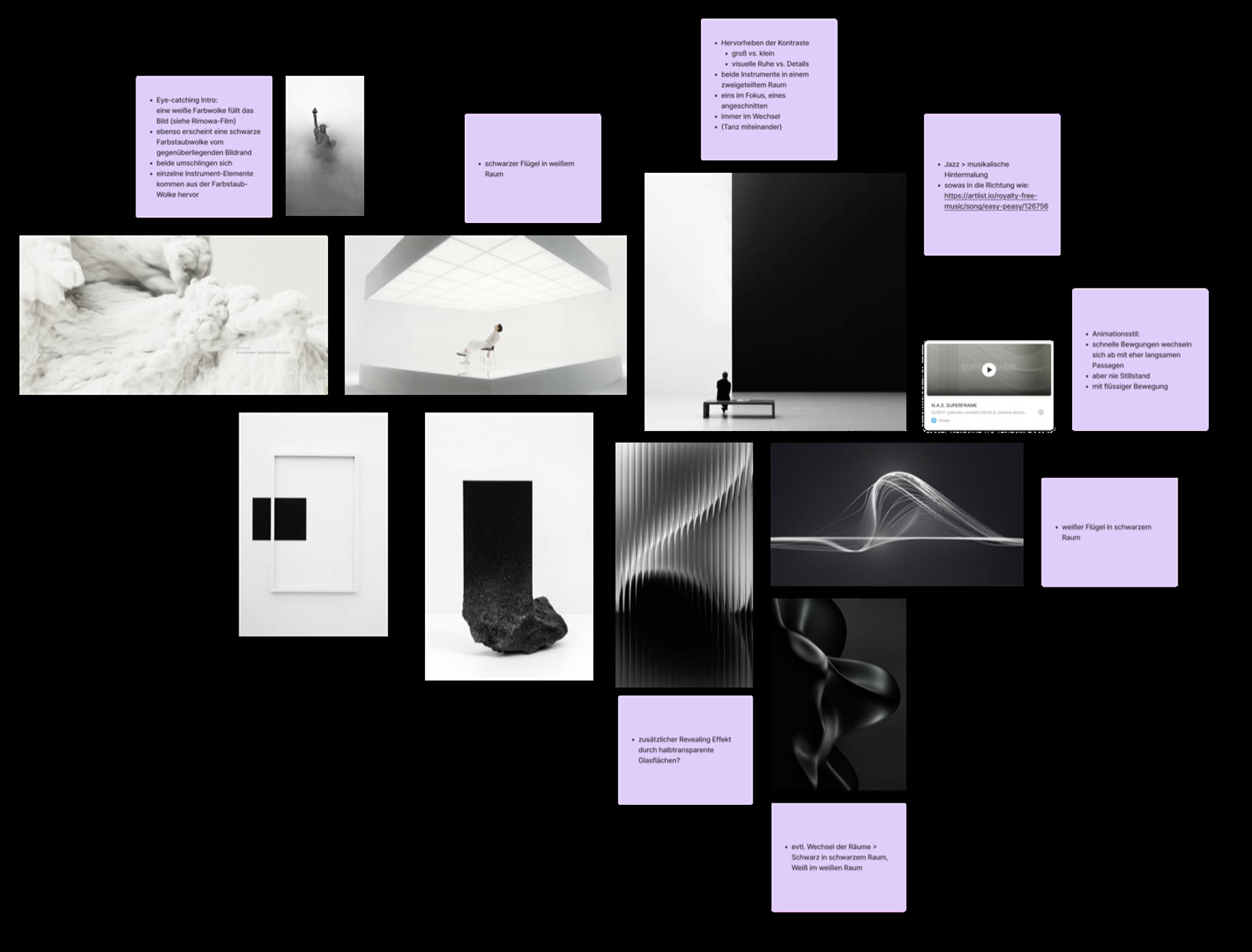
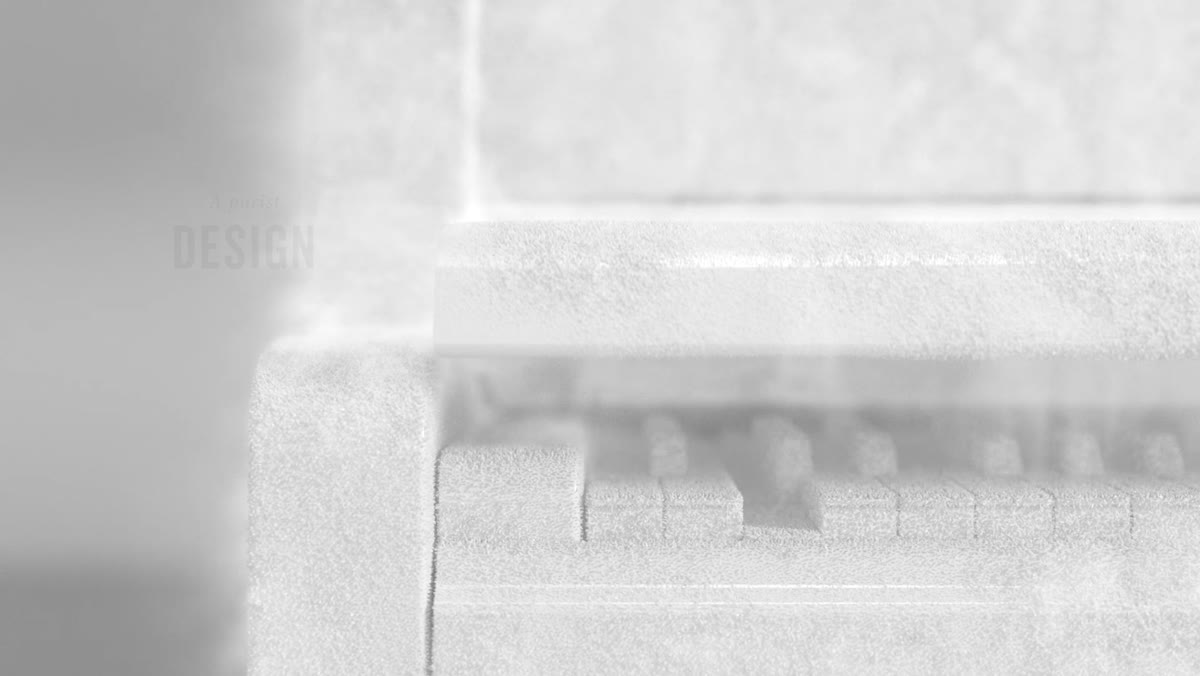
“A white cloud of colour fills the frame, and parts of the instrument emerge from it.”
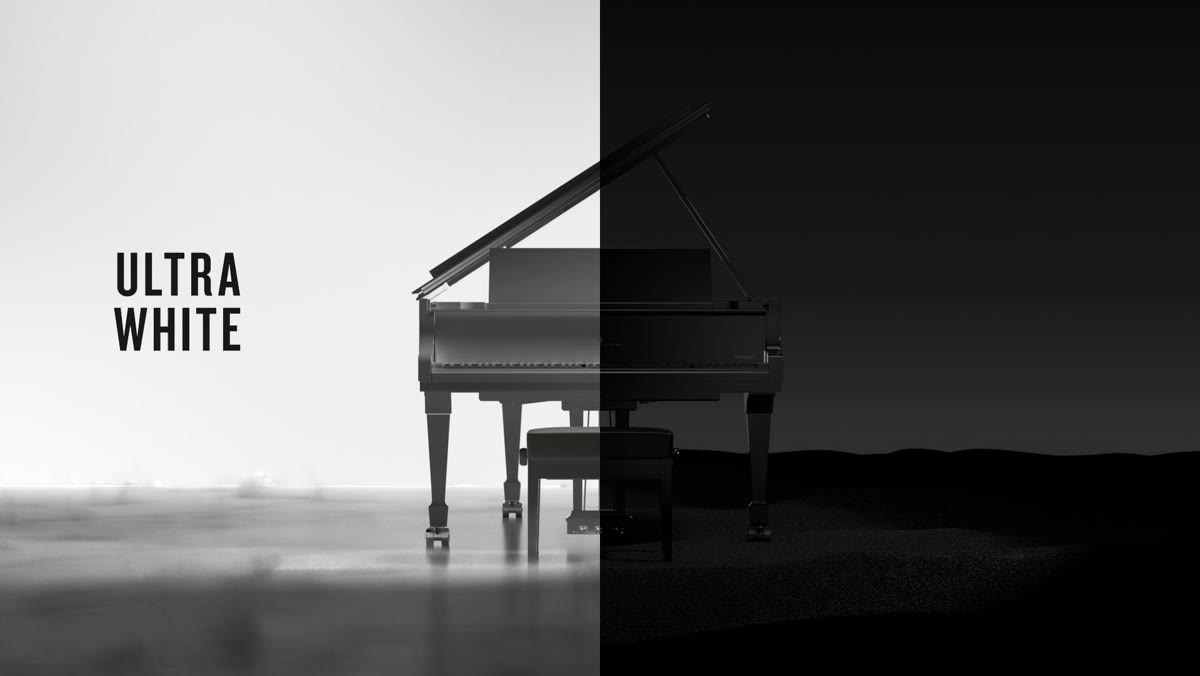
“Both instruments in one divided room, always taking turns.”
“Fast movements alternate with slower passages, but never standstill.”
The visual language
Black sand, dry ice, polished keys: every shot lives in one of the two worlds, and the camera never stops moving.
Born in black sand
Cast iron is poured into sand.
So the film begins where the plate itself begins: it rises out of the casting sand after the pour, grain by grain, until it stands upright. And the black of the sand carries over into the plate, which is exactly what makes the Ultra Black what it is.
Out of dry ice
The white world is cold.
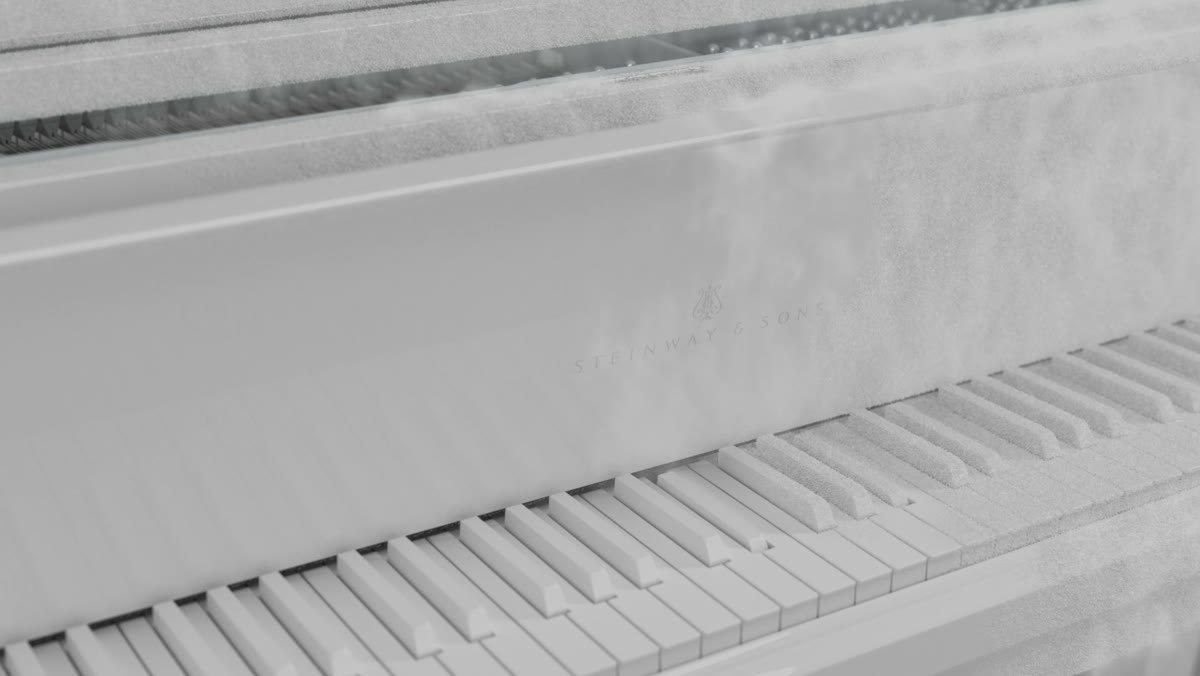
Here the instrument comes out of dry ice, the white cloud from the first note on the moodboard, made physical. The vapour reveals a little at a time: first an edge, then the keys, then the whole instrument. Fine ice crystals cover its surface and disappear together with the vapour, until only the white of the instrument is left.
Black or white
The two editions differ only in colour.
So instead of cutting from one to the other, the frame splits: same camera, same move, two worlds side by side. You compare without having to remember.
Keys in time
The keys play along.
Cut and key animation were built on the score, so when the camera glides along the keyboard, the keys move with the music. That is why the film is meant to be watched with sound.
Behind the film
Full creative ownership, from concept and look development to simulation, rendering and delivery.
Expensive creative decisions left no room for mistakes, and the simulations produced huge amounts of data. Only a few render farms would take on scenes like these. Conductor did, and the final frames were rendered entirely in their cloud.